
Before the Pilgrims: Texas's Forgotten First Thanksgiving
Before the Pilgrims: Texas's Forgotten First Thanksgiving
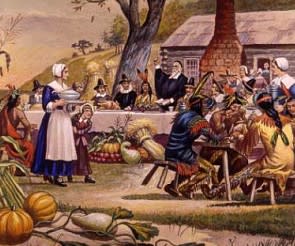
Here in Fredericksburg, when we think of Thanksgiving, our minds turn to a cool November, turkey, and the story of the Pilgrims and Wampanoag in 1621. But Texas, with its deep and often overlooked history, holds a claim to a much earlier, and distinctly Texan, celebration of gratitude. It took place not in the fall harvest season, but on a spring day in April 1598, twenty-three years before the famous feast at Plymouth.
The story belongs to Don Juan de Oñate and a massive Spanish expedition. Tasked by King Philip II of Spain with colonizing what is now New Mexico, Oñate led a caravan of nearly 500 people, 83 ox-drawn wagons, and an astounding 7,000 head of livestock across the vast and unforgiving Chihuahuan Desert. It was a brutal four-month journey. The colonists endured weeks desperate for food, without reliable water, and reduced to distilling water from cacti as described in contemporary accounts. Their physical suffering and emotional despair had to be significant.
A Feast of Survival on the Rio Grande
Their escape from the grueling journey arrived on the banks of the Río del Norte (Rio Grande) near what is now San Elizario, just east of El Paso. The exhausted and starving company staggered into a cottonwood grove, throwing themselves into the water. Ten days later, after resting and regaining their strength, Oñate declared a day of solemn thanksgiving.
On April 30, 1598, the weary Spanish colonists gathered for a Mass of thanks for their safe passage. According to the expedition’s historian, they "built a great bonfire and roasted the meat and fish, and then all sat down to a repast the like of which we had never enjoyed before." They butchered some of their cattle for carne asada, and the local Manso Indigenous people, a peaceful, semi-settled tribe, joined the celebration, offering the bounty of the river: freshly caught fish.
More Than a Meal
The day was more than just a meal. The religious ceremony included a sermon, a ceremonial gun salute, and, notably, a play—the first documented theatrical performance in what would become the United States. While the colonists celebrated their survival, Oñate also formally claimed the vast new territory for Spain in a ceremony known as La Toma (The Taking), marking the beginning of European settlement in the American Southwest.
While the modern, harvest-centric Thanksgiving tradition remains rooted in the Plymouth story, the 1598 event is officially recognized by the Texas Legislature as the First Thanksgiving. It was a demonstration of gratitude, a pivotal moment of cultural exchange with the Manso people, and a foundational event in Texas history.
As we Texans reflect on our heritage, this springtime feast of gratitude by the Rio Grande deserves a prominent place at the table. It reminds us that Thanksgiving is not just an American holiday—it’s a deeply human response to overcoming adversity, a tradition of thanks that has been celebrated on Texas soil for over four centuries.
A special thank you to the Texas Historical Commission for their Texas Time Travel series of articles including the First Thanksgiving in Texas written by Lance Catchings.
And, for all of you who read this column each week, THANK YOU! Have a blessed Thanksgiving with family and friends!